Shower Head Industry Insights: Water Flow, Design, Pressure & Spray Performance
The performance of a shower head is determined by several engineering factors, including water outlet structure, internal design, water pressure utilization, spray pattern, and overall shape. These elements directly influence user experience and represent the core competitiveness of shower head manufacturers. This article provides a clear and professional overview of the key technologies driving the modern shower head industry.
1
Water Outlet Technology
1.1 Micro-Nozzle Spray Structure
Modern shower heads often use micro-nozzle designs to increase spray density and improve water dispersion. This technology helps:
Generate fine and uniform droplets
Improve coverage and spray stability
Reduce water consumption while maintaining comfort
2
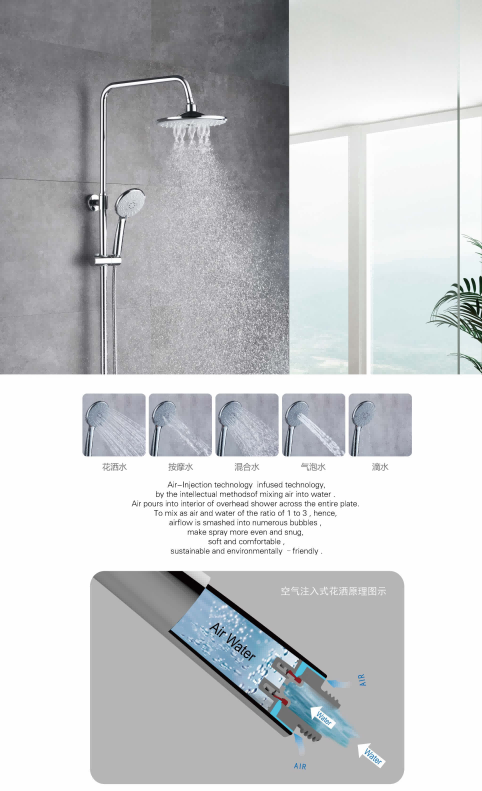
Air Injection Technology (Aerating)
1.2 Air Injection Technology (Aerating)
Air is mixed with water to create fuller and softer droplets, enhancing the showering experience. Benefits include:
Stronger and more voluminous spray
Softer skin feel with better coverage
Better performance in low-flow environments
3
Multi-Function Spray Modes
1.3 Multi-Function Spray Modes
Common spray patterns include:
Rainfall: Soft, wide coverage
Massage: Strong, pulsing water flow
Jet: High-pressure concentrated stream
Mist: Ultra-fine droplets for a gentle experience
Internal Engineering & Water Path Design
2.1 Independent Water Channels
Each spray mode uses a separate internal path, ensuring:
Stable water pressure
Reduced leakage or mixing between modes
Smoother switching experience
2.2 Pressure-Stabilizing Structure
A pressure regulator ensures consistent output even in buildings with low or unstable water supply. It prevents:
Water flow fluctuation
Loss of spray strength
Discomfort caused by sudden changes in pressure
2.3 Anti-Clog & Easy-Clean Design
Silicone nozzles and built-in filters help extend product life, especially in hard-water regions. Users can clean the spray head simply by pressing the soft nozzles to remove scale buildup.
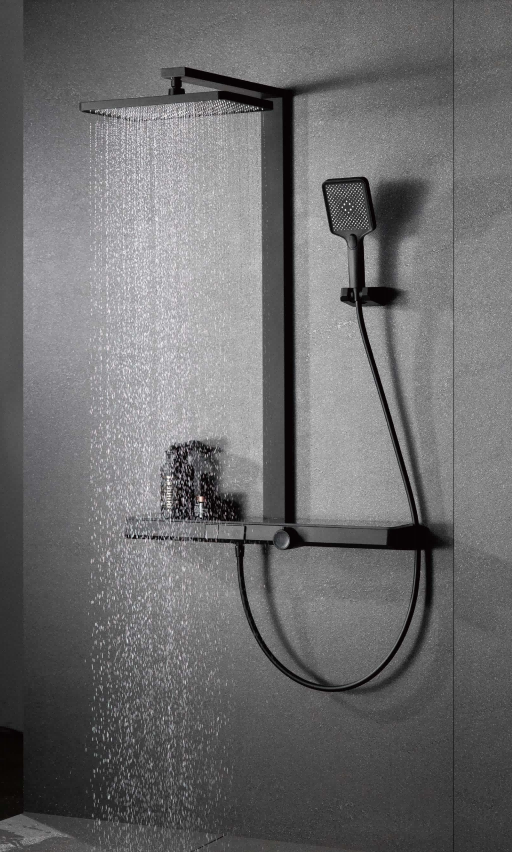
Shape and Spray Coverage

Most stable and widely used
Balanced pressure and spray distribution
Suitable for both household and hotel installations

Modern appearance, preferred in luxury bathrooms
Wider coverage area
Higher structural requirements for internal water dispersion

Create immersive "rainfall" experience
Require efficient pressure compensation
More spray nozzles → higher anti-clog performance needed
Water Pressure Performance
4.1 High-Pressure Shower Heads
Using narrowed outlets, optimized internal geometry, and air-mixing chambers, high-pressure shower heads improve performance in low-pressure environments.
4.2 Low-Pressure Optimization
Turbine or chamber-based pressurization
Reduced water path resistance
Stable regulator to support consistent output
4.3 High-Pressure Areas: Anti-Splash Control
Flow restrictors prevent overly strong jets
Softening plates provide smoother distribution.


Overview of Spray Effects
| Spray Type | Characteristics | Best Use |
|---|---|---|
| Rainfall | Soft, uniform, wide coverage | Daily showering, hotels |
| Massage | Strong pulses, targeted impact | Relaxation, shoulder & neck relief |
| Mist | Fine droplets, gentle feel | Light showering, beauty care |
| Jet | High-pressure narrow stream | Deep cleaning, fast rinsing |
| Mixed Mode | Combination of multiple spray patterns | Multi-user household needs |

Conclusion
The modern shower head industry is evolving toward more advanced water outlet technologies, optimized internal engineering, improved pressure performance, and increasingly diverse spray modes. Product differentiation now comes from spray comfort, water efficiency, and innovative design features rather than appearance alone.