


Yo, folks! As a supplier of PP Slow Close Dampers, I often get asked this burning question: "Can a PP Slow Close Damper be used in a corrosive environment?" Well, let's dig deep into this topic and find out.
First off, let's understand what a PP Slow Close Damper is. PP stands for polypropylene, which is a type of thermoplastic polymer. It's known for its lightweight, high chemical resistance, and relatively low cost. A slow - close damper, on the other hand, is a device that controls the movement of a door, lid, or other moving parts to ensure a smooth and quiet closing.
Now, when it comes to corrosive environments, things get a bit tricky. Corrosive environments can be found in various settings, such as chemical plants, wastewater treatment facilities, and even in some households where strong cleaning agents are used frequently. These environments contain substances that can react with materials and cause them to degrade over time.

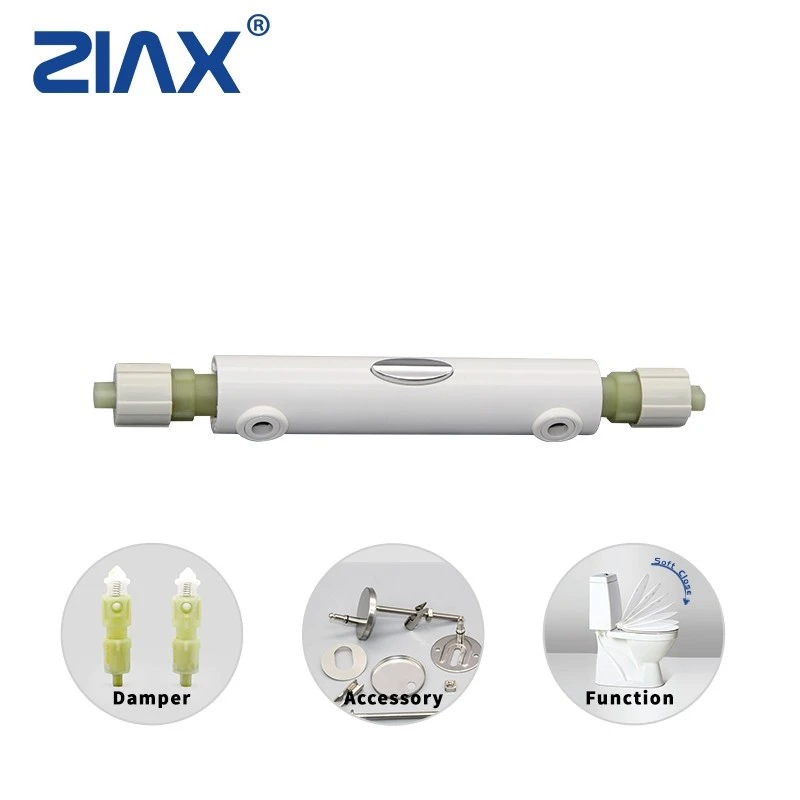
The good news is that polypropylene has some inherent properties that make it a good candidate for use in corrosive environments. PP has excellent resistance to many chemicals, including acids, alkalis, and solvents. This means that in many cases, a PP Slow Close Damper can withstand the corrosive effects of these substances without significant damage.
For example, in a chemical plant where mild acids or alkalis are present, a PP damper can hold up well. The polymer structure of polypropylene is relatively stable and doesn't easily react with these common chemicals. This stability allows the damper to continue functioning properly, providing that smooth and slow - closing action that we all love.
However, it's not all sunshine and rainbows. There are some limitations to using a PP Slow Close Damper in a corrosive environment. Some highly concentrated or aggressive chemicals can still pose a threat to the damper. For instance, strong oxidizing agents like concentrated nitric acid or chromic acid can break down the polypropylene structure over time. Exposure to these chemicals can cause the damper to become brittle, crack, or lose its damping properties.
Another factor to consider is the temperature. In a corrosive environment, high temperatures can accelerate the corrosion process. If the temperature is too high, the chemical reactions between the corrosive substances and the polypropylene can occur more rapidly, leading to faster degradation of the damper.
So, how can we ensure that a PP Slow Close Damper performs well in a corrosive environment? First, we need to assess the specific corrosive agents present in the environment. If the chemicals are mild and within the range of PP's chemical resistance, then using a PP damper is a viable option.
We also need to consider the operating conditions, such as temperature and humidity. If the temperature is high, we might need to take additional measures to protect the damper, such as using insulation or cooling systems.
In addition, proper maintenance is crucial. Regular inspections can help detect any signs of corrosion early on. If corrosion is detected, we can replace the damper before it fails completely.
Now, let me introduce some of our related products. We have the Tube Damper Hinge Set, which is designed to provide smooth and silent movement for various applications. It's made with high - quality materials and can be a great addition to your setup, even in some mildly corrosive environments.
Our Soft & Silent Smart Toilet Damper is another great product. It's specifically designed for toilets, providing a gentle and quiet closing action. And thanks to the use of PP, it can withstand the mild corrosive environment in a bathroom.
The Toilet Seat Rotary Damper Set is also worth mentioning. It ensures that your toilet seat closes slowly and silently, and with the polypropylene construction, it has good resistance to the chemicals commonly found in toilet cleaning products.
If you're in the market for a damper and have a corrosive environment in mind, don't hesitate to reach out. We can work with you to determine the best solution for your specific needs. Whether it's choosing the right type of damper or providing advice on maintenance, we're here to help. Just get in touch, and let's start the conversation about how our PP Slow Close Dampers can fit into your project.
In conclusion, a PP Slow Close Damper can be used in a corrosive environment, but it's important to understand its limitations. By carefully assessing the environment, considering the operating conditions, and performing regular maintenance, we can make the most of the damper's chemical resistance and ensure its long - term performance. So, if you're looking for a reliable and cost - effective solution for your slow - closing needs in a corrosive setting, give our PP Slow Close Dampers a try.
References
- "Polypropylene: Properties, Processing, and Applications" by X. Jiang
- "Corrosion Resistance of Polymers" by R. K. Singh


