


In the realm of mechanical engineering and product design, dampers play a crucial role in controlling motion, reducing vibrations, and enhancing the overall performance and lifespan of various mechanisms. Among the different types of dampers available, linear dampers and rotary dampers are two commonly used options, each with its own unique characteristics and applications. As a supplier of rotary dampers, I am well - versed in the nuances of these two types of dampers and will delve into the differences between them in this blog.
Working Principles
The fundamental difference between linear dampers and rotary dampers lies in their working principles. A linear damper is designed to control linear motion. It typically consists of a piston moving within a cylinder filled with a viscous fluid, such as oil. When a force is applied to the piston, it moves through the fluid, and the resistance generated by the fluid flow provides the damping effect. This resistance is proportional to the velocity of the piston, which helps to slow down or control the linear movement of the connected component.
On the other hand, a rotary damper is engineered to control rotational motion. It usually contains a viscous fluid within a housing, and a rotor is immersed in this fluid. As the rotor rotates, the fluid resists its motion, creating a damping torque. This torque is used to regulate the speed of rotation of the attached part, preventing sudden or uncontrolled spinning.
Structural Design
The structural design of linear and rotary dampers also varies significantly. Linear dampers are often long and cylindrical in shape, with a rod extending from one end. This rod is connected to the moving part that requires linear motion control. The internal piston and cylinder arrangement is straightforward, and the overall structure is relatively simple, making it easy to integrate into systems where linear movement needs to be dampened, such as sliding doors or drawers.
Rotary dampers, in contrast, have a more compact and circular design. They can be in the form of a flat disc - like structure or a small cylindrical unit. The rotor, which is the key rotating component, is carefully balanced within the housing to ensure smooth and consistent damping performance. This compact design allows rotary dampers to be easily incorporated into applications with limited space, such as hinges, lids, and rotating knobs.
Application Scenarios
The differences in working principles and structural design lead to distinct application scenarios for linear and rotary dampers.

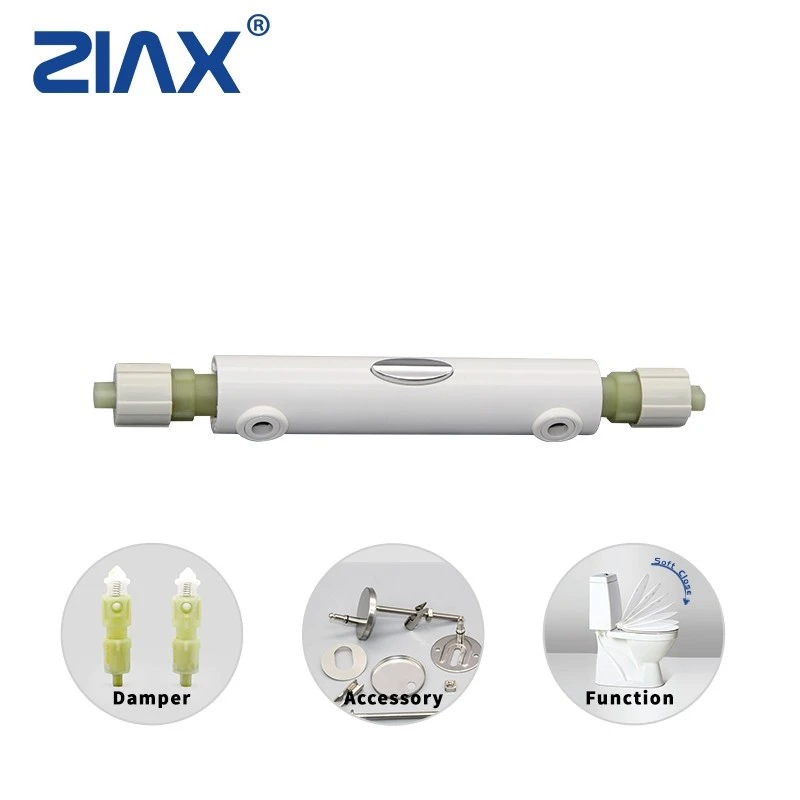
Linear dampers are widely used in applications where linear motion needs to be controlled. For example, in the furniture industry, they are used in sliding cabinet doors to prevent them from slamming shut. In automotive applications, linear dampers can be found in shock absorbers, which help to smooth out the up - and - down motion of the vehicle's suspension system. They are also used in industrial machinery for controlling the linear movement of conveyor belts and other linear - motion components.
Rotary dampers, on the other hand, are prevalent in applications involving rotational motion. In the consumer goods sector, they are commonly used in Toilet Seat Rotary Damper Set, which ensures that the toilet seat closes slowly and quietly, preventing any loud slamming noises. In electronic devices, rotary dampers are used in rotating displays or adjustable panels to provide smooth and controlled rotation. They are also used in office furniture, such as adjustable monitor stands and rotating chairs, to control the rotational movement. Another important application is in the PP Compatible Damper, which is suitable for products made of polypropylene materials, providing reliable damping for various rotational functions. And the Tube Damper Hinge Set is often used in applications where a tube - like structure needs to be hinged with controlled rotation.
Performance Characteristics
When it comes to performance, linear and rotary dampers have different characteristics. Linear dampers are mainly evaluated based on their damping force, which is the force required to move the piston through the fluid. This damping force can be adjusted by changing the viscosity of the fluid, the size of the piston, or the diameter of the cylinder. The stroke length, which is the maximum distance the piston can travel, is also an important parameter, as it determines the range of linear motion that can be dampened.
Rotary dampers, however, are characterized by their damping torque. The damping torque is affected by factors such as the viscosity of the fluid, the design of the rotor, and the size of the housing. The rotational angle is another crucial performance indicator, which indicates the maximum angle through which the rotor can rotate while maintaining effective damping. Rotary dampers can provide a more precise and consistent damping effect for rotational motion, as they are specifically designed to control the angular velocity.
Advantages and Disadvantages
Both linear and rotary dampers have their own advantages and disadvantages.
The advantages of linear dampers include their simplicity in design and ease of installation. They are relatively inexpensive to manufacture, making them a cost - effective solution for many linear - motion control applications. However, their long and cylindrical shape may not be suitable for applications with limited space. Also, they are only effective for linear motion and cannot be used directly for rotational control.
Rotary dampers, on the other hand, offer a high degree of precision in controlling rotational motion. Their compact design allows for easy integration into small - scale applications. They can provide a smooth and quiet damping effect, which is particularly important in consumer products where noise reduction is a priority. However, rotary dampers can be more complex to design and manufacture, which may result in higher costs compared to linear dampers.
Conclusion
In conclusion, linear dampers and rotary dampers are two distinct types of dampers with different working principles, structural designs, application scenarios, performance characteristics, and advantages and disadvantages. Understanding these differences is crucial for engineers, designers, and manufacturers when selecting the appropriate damper for their specific applications.
As a supplier of rotary dampers, we offer a wide range of high - quality rotary dampers that are suitable for various industries and applications. Our products are designed to provide reliable and consistent damping performance, ensuring smooth and controlled rotational motion. Whether you are in the furniture, automotive, consumer goods, or electronics industry, our rotary dampers can meet your specific needs.
If you are interested in our rotary damper products or have any questions about damper selection, please feel free to contact us for procurement and further discussions. We are committed to providing you with the best solutions and excellent customer service.
References
- Norton, Robert L. "Machine Design: An Integrated Approach." Pearson, 2012.
- Shigley, Joseph E., et al. "Mechanical Engineering Design." McGraw - Hill Education, 2015.


