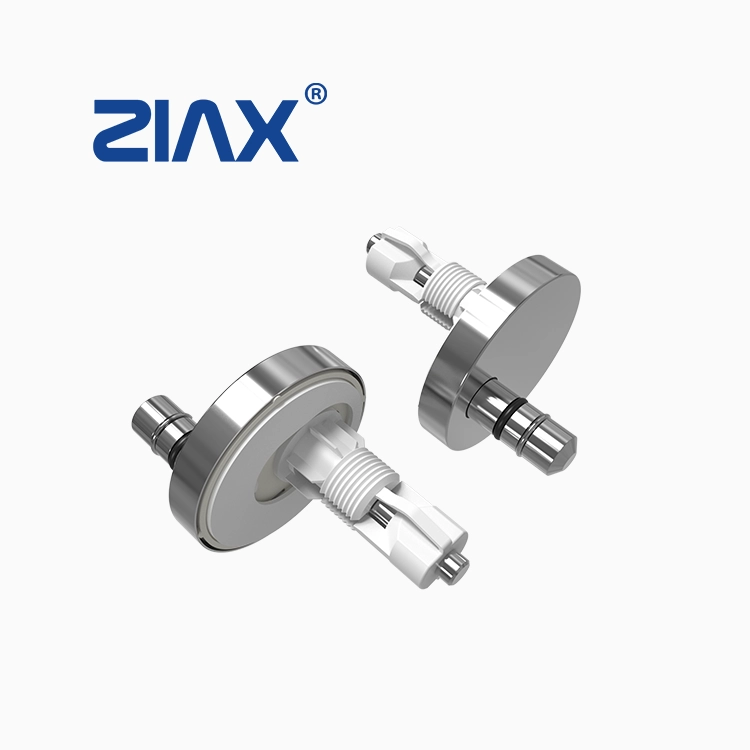
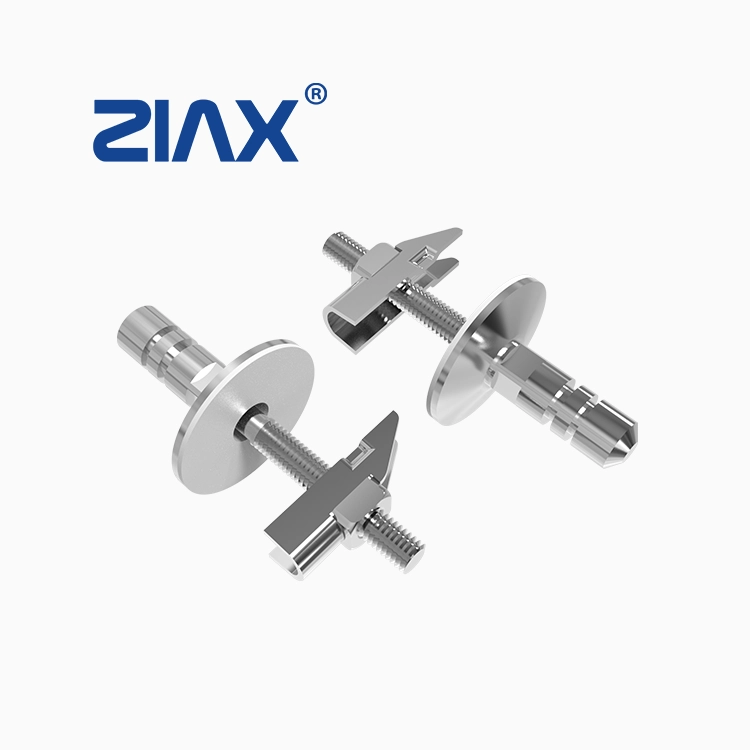
A toilet seat damper is responsible for controlling the closing movement of a soft-close toilet seat or lid. When its damping performance changes, the most noticeable symptoms are usually changes in closing speed, abnormal noise, leakage or loss of soft-close control.
This guide explains how to identify possible damper failure, which checks buyers and maintenance teams can perform, when replacement is appropriate, and how to select a replacement damper for an OEM or aftermarket project.
1. What Are the Main Signs That a Toilet Seat Damper Needs Replacement?
The clearest signs are changes in the way the toilet seat or lid moves. A healthy soft-close system should provide controlled and reasonably consistent closing behavior.
| Observed symptom | Possible indication | Recommended action |
|---|---|---|
| Seat suddenly slams shut | Loss or significant reduction of damping resistance | Inspect the damper and hinge; replacement may be required. |
| Closing speed becomes inconsistent | Damper performance may have changed or become uneven | Compare the current closing behavior with the original performance. |
| Oil leakage around the damper | Possible seal or housing damage | Stop relying on the damper and inspect for replacement. |
| Squeaking during closing | Possible friction or lubrication-related issue | Inspect before replacing; persistent noise warrants further evaluation. |
| Grinding or rattling | Possible internal mechanical damage | Replacement is generally the appropriate next step if damage is confirmed. |
| Seat pauses during closing | Possible damping or mechanical obstruction issue | Check the damper, hinge and surrounding mechanism. |
| Two sides close at different speeds | Possible uneven wear in a dual-damper system | Inspect both dampers and the hinge assembly together. |
2. Does a Slow-Closing Toilet Seat Always Mean the Damper Is Failing?
Not necessarily. A change in closing behavior can originate from the damper, the hinge, the seat assembly or the interaction between these components.
Therefore, buyers should not diagnose a damper only from one symptom. Check the complete system:
- Observe the closing movement.
- Listen for abnormal sounds.
- Inspect the damper housing and surrounding area.
- Check whether the hinge remains correctly installed.
- Compare current performance with the original or approved sample.
- Check damper dimensions and torque before ordering a replacement.
3. What Does Abnormal Noise Tell You?
| Noise | Possible cause described in the source material | Replacement implication |
|---|---|---|
| Squeaking | Possible friction or insufficient lubrication | May require inspection or maintenance first; persistent noise should be investigated. |
| Grinding | Possible internal mechanical damage | Strong indication for replacement when internal damage is confirmed. |
| Rattling | Possible damaged internal components | Inspect the damper and replace if the internal mechanism is damaged. |
| No abnormal noise | Consistent and quiet movement is generally expected from a functioning soft-close system | Continue monitoring closing speed and consistency. |
Noise should be considered together with closing behavior. A squeak does not automatically prove that a damper has failed, while grinding or rattling combined with degraded damping is a stronger reason to inspect or replace the component.
4. How Do You Test a Toilet Seat Damper at Home or in a Commercial Bathroom?
A simple functional check is to observe the seat or lid through its normal closing movement and compare the result with the original or approved condition.
Basic functional check
- Open the seat or lid to a repeatable starting angle.
- Release it without manually pushing it downward.
- Observe whether the closing speed remains reasonably consistent.
- Listen for slamming, squeaking, grinding or rattling.
- Repeat the test several times to identify inconsistent behavior.
The original source uses a 90° to 0° closing test and identifies 3–5 seconds as a reference range for a functional damper. It also describes more than one second of deviation as a screening trigger for commercial clients.
5. Professional Damper Testing for Trade Buyers
For hotels, sanitaryware manufacturers, distributors and OEM buyers, a repeatable test method is more useful than subjective judgment.
| Test item | Source-described procedure | Source-described failure indicator | Procurement use |
|---|---|---|---|
| Oil seal integrity | Submerge the damper in 30°C water for 24 hours. | Visible bubbles or oil slick on the water surface. | Screen for possible sealing problems. |
| Load-bearing / repeated closing | Apply a 5 kg load to the seat edge and repeat closing 500 times. | Slow-close time shortens by more than 2 seconds. | Compare performance before and after repeated operation. |
| Temperature resistance | Expose the damper to -10°C and 60°C environments for 4 hours each and test operation. | Failure to close smoothly at either temperature. | Useful when environmental conditions are part of the specification. |
These procedures and thresholds are reproduced as practical screening criteria from the source material. Buyers should define the final test method and acceptance criteria for their own product, market and application.
6. When Should You Replace a Toilet Seat Damper?
Replacement is more strongly justified when one or more of the following conditions are present:
- Oil leakage or visible cracks are present.
- Grinding or rattling continues and internal damage is suspected.
- The seat repeatedly slams instead of closing under controlled resistance.
- Closing performance has changed substantially compared with the original condition.
- Noise remains after appropriate inspection or maintenance.
- A dual-damper system develops clearly uneven closing behavior.
The original source also uses a closing-time deviation of more than 50% from the original performance as a replacement trigger. For procurement and engineering work, however, comparing against the approved sample or product specification is preferable to applying one percentage to every damper.
7. Does Damper Age Alone Mean It Needs Replacement?
No. The source material notes that symptoms can become more common after two to three years of use, but age alone should not be treated as a universal replacement rule.
Actual service life depends on factors such as usage frequency, seat/lid configuration, damper design, environment, installation and operating conditions.
| Condition | More useful than age alone? |
|---|---|
| Closing performance | Yes |
| Oil leakage | Yes |
| Abnormal noise | Yes |
| Visible damage | Yes |
| Cycle-test performance | Yes |
| Calendar age alone | No |
8. How Can Maintenance Help Extend Damper Service Life?
The source material recommends routine maintenance and avoiding forced closure. Its practical recommendations include:
- Clean the external damper housing regularly.
- Keep dust and hair from accumulating around the mechanism.
- Avoid manually slamming the seat or lid.
- Use only lubrication appropriate for the specific damper design and supplier instructions.
- Inspect the hinge and damper when closing behavior changes.
9. What Should You Check Before Buying a Replacement Damper?
A replacement damper should be selected from the actual technical requirements rather than from the product name alone.
| Parameter | Why it matters | What to provide to the supplier |
|---|---|---|
| Damper diameter | Determines physical compatibility with the hinge. | Current diameter or technical drawing. |
| Torque | Controls the damping resistance applied to the seat/lid. | Required torque or existing damper specification. |
| Opening angle | Determines the usable operating range. | Required opening/closing angle. |
| Shaft/interface | Must match the hinge mechanism. | Shaft dimensions and mounting/interface drawing. |
| Seat/lid weight | Affects the required damping behavior. | Actual or approximate assembly weight. |
| Hinge geometry | Changes the relationship between damper torque and seat movement. | Hinge drawing or existing sample. |
| Target lifecycle | Defines the required durability level. | Required cycle count and test condition. |
10. Ziax Toilet Seat Damper Options for Replacement Projects
Ziax currently publishes several toilet-seat damper models. The following examples show why buyers should compare technical parameters rather than selecting only by product name.
| Model | Published material | Published torque | Published angle / size | Potential use |
|---|---|---|---|---|
| 20D Toilet Seat Soft Close Damper | PA66 + 50% GF shell and shaft | 1.0–3.0 N·m | 20 mm; 0°–110° | General toilet-seat soft-close applications |
| 1804 Damping for Toilet Lids | PA66 + 50% GF shell and shaft | Published page lists 1.0–3.0 N·m in its technical table | 20 mm; 0°–110° | Toilet-lid damping applications |
| 16G Silent Soft Close Damper | PA66 + 50% GF shell; zinc shaft | 1.0–3.0 N·m | 16 mm; 0°–110° | Compact silent soft-close applications |
| 2033 Toilet Seat Cover Damper | PA66 + 50% GF shell and shaft | 1.0–2.5 N·m | See current product specification | Replacement / OEM toilet-seat projects |
| 2003 Soft Close Toilet Seat Damper | PA66 + 50% GF shell and shaft | 1.0–3.0 N·m | See current product specification | Soft-close toilet-seat systems |
| 2038 UF Soft Close Damper | PA66 + 50% GF shell and shaft | 1.0–3.0 N·m | See current product specification | UF toilet-seat applications |
Ziax's damper category currently includes these and additional toilet-seat damper products, allowing buyers to compare different configurations for OEM and replacement projects.
11. Example: What Does the 20D Damper Specification Tell a Buyer?
The Ziax 20D is a useful example of an engineering-oriented product specification. Its published information identifies a 20 mm dimension, PA66 + 50% GF shell and shaft, 0°–110° opening/closing angle, 1.0–3.0 N·m torque and a published lifetime of more than 50,000 times.
| 20D parameter | Published specification |
|---|---|
| Item code | 20D |
| Dimension | 20 mm |
| Shell material | PA66 + 50% GF |
| Shaft material | PA66 + 50% GF |
| Opening / closing angle | 0°–110° |
| Torque | 1.0–3.0 N·m |
| Published lifetime | >50,000 times |
| Published lead time | 20 working days |
| OEM | Accepted |
The product page specifically asks buyers to check damper dimensions carefully and communicate the required torque before ordering. This is also the correct approach for replacement projects: match the technical interface first, then validate the closing behavior.
12. When Should You Replace Only the Damper vs. the Complete Hinge?
| Situation | First option to evaluate | Why |
|---|---|---|
| Damper leakage but hinge remains mechanically sound | Damper replacement | The visible failure may be localized to the damper. |
| Correct damper but loose or damaged hinge | Hinge inspection / replacement | The hinge itself may be affecting closing behavior. |
| Unknown damper specification | Technical identification first | Ordering by appearance alone creates compatibility risk. |
| Both damper and hinge are damaged | Complete hinge-system evaluation | Replacing only one component may not restore the intended performance. |
| OEM redesign project | Damper + hinge + seat validation | Torque and geometry must be evaluated as a system. |
For OEM projects, buyers can also review Ziax's toilet-seat damper range together with the complete damper category .
13. How Should Hotels and Commercial Buyers Monitor Toilet-Seat Dampers?
Commercial bathrooms can experience much higher operating frequency than a typical residential bathroom. A simple repeatable inspection routine can therefore help identify changes before a damper completely loses its soft-close function.
- Check closing speed at a consistent starting angle.
- Listen for new squeaking, grinding or rattling.
- Check the damper housing for leakage or visible damage.
- Compare left and right closing behavior where two dampers are used.
- Record unusual changes rather than relying only on subjective impressions.
- Escalate repeated failures for technical inspection and replacement.
14. OEM Replacement: What Information Should You Send a Damper Manufacturer?
If the goal is to replace a discontinued damper or source a custom component, the fastest way to obtain a useful quotation is to provide the technical information available.
- Existing damper sample or clear photographs.
- Damper diameter and overall dimensions.
- Shaft and interface dimensions.
- Required opening angle.
- Existing or required torque.
- Toilet-seat or toilet-lid material.
- Approximate seat/lid weight.
- Hinge drawing or sample.
- Target lifecycle.
- Annual quantity or expected order quantity.
- Destination market.
- Packaging or private-label requirements.
This information allows the manufacturer to determine whether a standard model is suitable or whether a customized damper should be developed.
15. Product Evidence: What Should Buyers Ask the Supplier to Confirm?
| Evidence | Why it matters |
|---|---|
| Controlled product drawing | Confirms dimensional compatibility. |
| Torque specification | Confirms expected damping resistance. |
| Material specification | Defines housing and shaft construction. |
| Lifecycle test information | Shows how durability was evaluated. |
| Sample | Allows installation and functional validation. |
| Inspection information | Helps confirm production consistency. |
| Lead-time confirmation | Supports production planning. |
| Destination-market documentation | Supports the buyer's compliance process where applicable. |
16. Replacement Decision Tree
- Does the seat slam?
If yes, inspect the damper and hinge system. - Is there visible oil leakage or cracking?
If yes, treat the damper as a replacement candidate. - Is there abnormal grinding or rattling?
If yes, inspect for internal damage. - Is the closing speed inconsistent?
Repeat the test under the same starting condition. - Does the damper still match the required torque and dimensions?
If not, select a compatible replacement rather than ordering by appearance. - Is this an OEM or commercial project?
Request a sample and define the acceptance test before bulk production.
17. FAQ: Toilet Seat Damper Replacement
How do I know if my toilet seat damper needs replacing?
Common warning signs include sudden slamming, inconsistent closing speed, oil leakage, visible damage and persistent abnormal noise. Check the complete hinge system before ordering a replacement.
Why is my soft-close toilet seat slamming?
A loss of damping resistance can cause the seat to slam, but the hinge or installation can also affect closing behavior. Inspect the damper and hinge before replacing components.
Can a squeaking toilet seat damper be repaired?
A squeak can sometimes be related to friction or lubrication, but the correct maintenance procedure depends on the damper design. Persistent noise, especially when combined with degraded damping, should be investigated for wear or replacement.
How long does a toilet seat damper last?
Service life depends on the damper model, seat configuration, operating frequency and test conditions. Some Ziax damper models publish lifecycle figures above 50,000 cycles. Buyers should confirm the applicable test method for the exact model.
Can I replace a toilet seat damper with any 20 mm damper?
No. Diameter alone does not establish compatibility. Torque, shaft dimensions, opening angle and hinge geometry should also be checked.
Can Ziax provide samples for toilet seat damper replacement projects?
Ziax product pages state that samples are available for damper evaluation. Buyers should provide the required dimensions, torque and application information so the appropriate model can be evaluated.
18. Author & Editorial Review
Original publication: August 8, 2025.
Editorial scope: This page has been structured as a practical toilet-seat damper troubleshooting and replacement guide. It separates observable symptoms, screening tests, replacement criteria, product evidence and OEM procurement requirements.
Evidence basis: Product specifications referenced in this article are based on Ziax's currently published toilet-seat damper product information. Testing procedures and replacement indicators are identified as source-derived practical criteria rather than universal industry standards.
Commercial disclosure: Ziax Sanitaryware is the manufacturer/supplier referenced in the product examples. Product availability, specifications, lead times, samples and customization should be confirmed with Ziax before purchase.
Final compatibility decision: A replacement damper should be approved only after dimensional, torque and functional compatibility has been confirmed for the target toilet-seat or toilet-lid assembly.
```19. Request a Toilet Seat Damper Replacement or OEM Quote
Need a Replacement or Custom Toilet Seat Damper?
Send your existing damper, technical drawing or toilet-seat model. Ziax can evaluate the required dimensions, torque and application and recommend a suitable standard or customized damper.
For faster evaluation, include:
- Existing damper sample or photos
- Damper diameter and shaft dimensions
- Required torque
- Opening angle
- Toilet-seat or lid dimensions
- Seat/lid material and approximate weight
- Target lifecycle
- Sample quantity
- Order quantity
- Packaging or OEM branding requirements