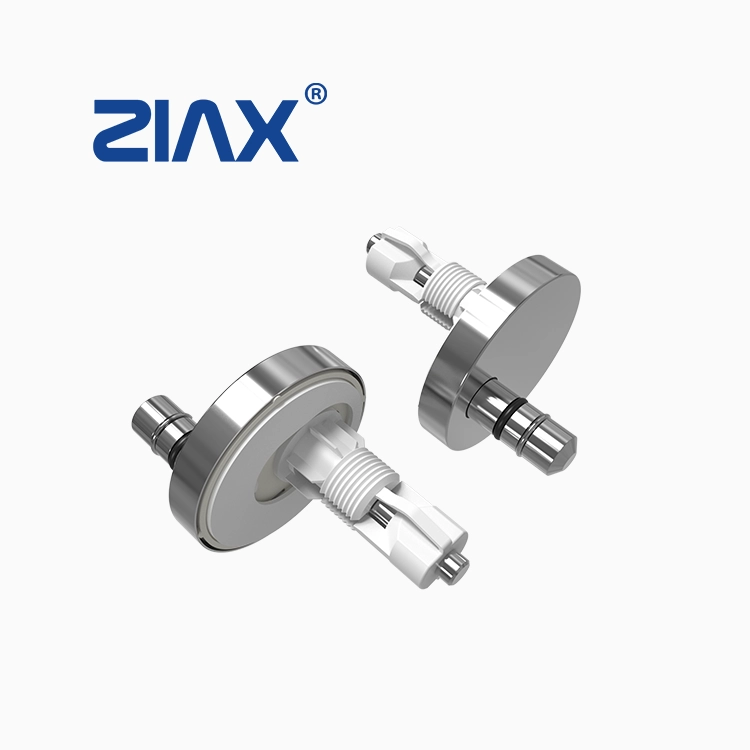
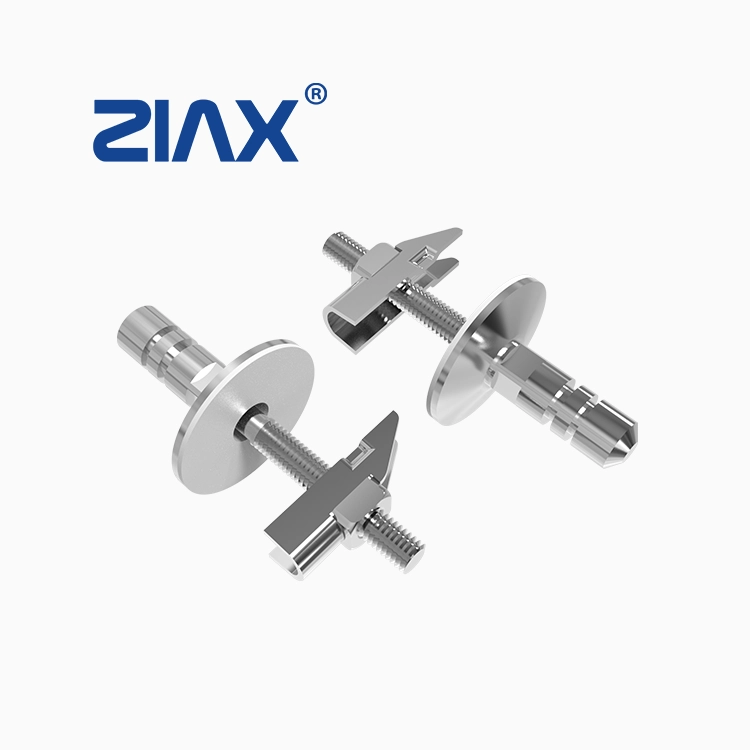
Why is it that the same damper needs to be "gently silent" when installed on a toilet seat, but "stable and impact-resistant" when used on a washing machine door? Can production really ignore scenarios, using the same oil filling and testing standards? The answer is clearly no. From materials to structure, from craftsmanship to services, the "customization" of dampers is far more complex than it appears.
Do Damper Material Selections Really Need to "Target the Scenario"?
Different product usage environments have vastly different requirements for the "durability" of damper materials, and our dampers feature precise material ratios:

01
Toilet seat dampers
PA66+GF30% shells resist moisture erosion, while zinc alloy connectors with sealing rubber rings prevent bathroom moisture from seeping inside.
02
Washing machine door dampers
PA66+GF50% shafts resist high-frequency impacts, remaining unbroken after 20,000 pressure tests and withstanding repeated 5kg clothing weight.
03
Refrigerator dampers
Zinc alloy components maintain excellent low-temperature toughness at 0°C, avoiding brittleness.
04
Insulation box dampers:
PA66+GF30% shells are wear-resistant, paired with zinc alloy bushings, resulting in ≤0.1mm wear after 50,000 openings/closing.
Structural Design Differences: Why Can't a Toilet Seat Damper Fit a Washing Machine?
Damper structural design must precisely match a product's "opening/closing logic," with our core parameters set to 0-110° opening angle and slow descent starting at 70°-a design with hidden ingenuity,Opening Angle and Slow Descent Trigger Point:
Toilet seats
Fully open at 110°, with slow descent starting at 70° and torque stabilized at 1-3N, ensuring the lid closes gently without user effort, with noise ≤30 decibels.
Washing machine doors
Maximum 110° opening angle, with 70° slow descent to avoid "slamming" during closing; 1-3N torque buffers impact while preventing clothing pinching.
Refrigerators and insulation boxes
110° opening angle facilitates access; 70° slow descent with 1-3N torque reduces cold air leakage, and PA66+GF30% shell sealing improves energy efficiency by 10%.
Stress Structure Optimization
The shaft-shell connection uses a "stepped engagement" design. For high-pressure washing machine scenarios, engagement depth increases by 2mm, achieving 800N pull-out resistance-exceeding the 500N standard of ordinary dampers.
Customization Process: How Many Steps From "Client Requirements" to "Product Delivery"?
Our customization service is not just about material changes but full-process "scenario adaptation," focusing on personalized adjustments to core parameters
Demand Analysis
When clients provide requirements, we focus on three core parameters-need to adjust the opening angle within 0-110°? Need to deviate from 70° for slow descent trigger? Need more than 20,000 pressure tests? For large insulation boxes, we might adjust the slow descent trigger to 60° while maintaining 1-3N torque for better closing stability.
Solution Design
We offer material fine-tuning based on needs. For example, washing machines in high-temperature environments get PA66+GF30% shells with additional heat-resistant agents to resist deformation at 40°C; frequently opened toilet seats get zinc alloy connectors with lubricating coatings to extend lifespan beyond 50,000 openings.


Sample Testing
We provide 3 free samples, tested under simulated client scenarios-50,000 regular openings (damping force attenuation ≤15%, torque maintained at 1-3N) + 20,000 pressure tests (5kg load for structural integrity), plus 0-40°C temperature cycle tests to ensure torque stability.
Mass Production
After sample approval, products are labeled with "custom IDs" (e.g., "MTG-2023-012" for toilet seat customization). 1% of each batch undergoes secondary testing, with data retained for 3 years.
Environmental Adaptation: Beyond Temperature, What "Hidden Threats" Challenge Dampers?
Damper "durability" often fails due to environmental details, and our 0-40°C temperature range is designed to tackle multi-scenario challenges:
Humidity Protection
For bathroom humidity ≥80%, zinc alloy connectors feature double plating (nickel + chromium), and PA66+GF30% shell seams use food-grade silicone seals, preventing moisture infiltration after 50,000 openings to avoid oil emulsification and torque abnormalities.
Dust and Corrosion Resistance
Washing machine doors near detergent residues get PA66+GF30% shells with alkali-resistant additives and passivated zinc alloy components, remaining rust-free and unbroken after 20,000 pressure tests with torque stable at 1-3N.
Vibration Stability
To prevent noise from insulation box transportation vibrations, buffer gaskets are added between PA66+GF50% shafts and zinc alloy shells. After 50,000 openings under 10-30Hz vibration tests, torque fluctuation remains ≤±0.3N with silent operation.
Raw Material Traceability
Glass fiber content in PA66+GF30%/50% is verified by third-party labs; zinc alloy composition (95% zinc, 3% copper, 2% magnesium) comes with material certificates to meet customization requirements.
Production Records
Oil filling records include temperature (25±2°C), volume (error ≤0.05ml), opening angle calibration (0-110° deviation ≤1°), and torque calibration (1-3N deviation ≤±0.2N), uploaded to a cloud system for client access.
Test Data Archiving
Each batch's report includes three key metrics-torque after 50,000 openings (initial 2N, final ≥1.7N), structural deformation after 20,000 pressure tests (≤0.1mm), and torque fluctuation in 0-40°C cycles (≤±0.3N).
After-Sales Response
Custom IDs enable 24-hour traceability. For example, "slow descent failure" can be traced to insufficient oil volume via records, with replacement or rectification provided within 48 hours.
Quality Traceability: How Far Can We Trace If Issues Arise?
Our customized dampers feature full traceability from raw materials to finished products, with comprehensive core parameter records
From precise PA66+GF material ratios to user-friendly 0-110° opening angles with 70° slow descent, from rigorous 50,000 opening and 20,000 pressure tests to 0-40°C temperature adaptability and stable 1-3N torque, our damper customization service centers on scenario needs.
Whether you need silent slow descent for toilet seats, impact resistance for washing machines, or stability for refrigerators/insulation boxes, tell us your product features, and we'll make the damper a tailor-made perfect partner.